
When to See a Paediatric Physio: A Guide for Parents

Written by HK registered Physiotherapist Julia Lee
As a parent, you’re often the first to notice the tiny details in how your baby moves - the way they kick their legs, how they hold their head during tummy time, or that first attempt at a roll. While every child develops at their own pace, there are times when a little extra support from a paediatric physiotherapist can make a world of difference.
Unlike adult physio, which often focuses on injury recovery, paediatric physiotherapy is all about supporting developmental milestones and helping your little one reach their full physical potential.
Here are the key signs that it might be time to book an assessment.
1. Delayed Developmental Milestones
If your baby is consistently behind the "typical" windows for major movements, a physio can help identify if there is an underlying reason, such as muscle weakness or tightness.
● 0–3 Months: Struggling to lift or hold their head up during tummy time
.png)
Using a toy like the Follow Bee Crawl Toy encourages your baby to lift and look up during tummy time and get them turning their head to both sides
● 6–7 Months: Not yet rolling from tummy to back or vice versa
● 8–9 Months: Unable to sit independently without support
● 10-12 Months: No form of independent mobility (like crawling or commando/army crawl) or not yet pulling to stand
● 18 Months: Not yet walking independently
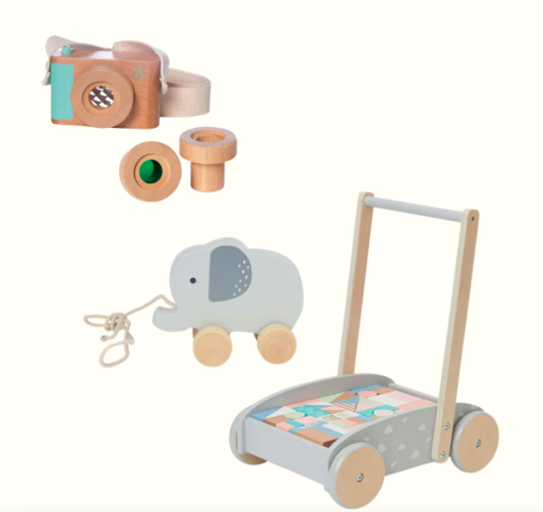
The Little Explorers activity Set when weighed down with heavy blocks is a great way to encourage walking in a baby who is already crawling but delayed in starting to walk
2. Asymmetry (A "Preferred" Side)
Babies should generally move both sides of their body equally. You should seek advice if you notice:
● Head Tilt or Rotation: Your baby always tilts their head to one side or has a strong preference to look only one way (this may be Torticollis)
● Flat Spots: A flattening on one side or the back of the head (Plagiocephaly) often goes hand-in-hand with neck tightness
● One-Sided Movement: They consistently use one hand more than the other, or kick with only one leg
3. Unusual Muscle Tone
Sometimes a baby’s muscles may feel different than expected when you pick them up:
● "Floppy" (Hypotonia): If your baby feels very limp, has poor head control, or seems to "slip through your hands"
● "Stiff" (Hypertonia): If their limbs feel very rigid, they frequently arch their back, or they keep their fists tightly clenched most of the time
4. Coordination and Gait Concerns
As your child moves into the toddler years, you might notice patterns that affect their balance:
● Persistent Toe Walking: While common when first learning to walk, consistent tiptoeing beyond age 2 can signal muscle tightness
● Frequent Falls: If your child seems significantly more clumsy than their peers or trips constantly on flat surfaces
● W-Sitting: Consistently sitting with their knees in front and feet out to the sides in a "W" shape, which can impact hip and core development

Why Early Intervention Matters
The early years are a "window of opportunity" where a baby's brain and body are incredibly adaptable. Early paediatric physio isn't just about "fixing" a problem; it's about providing the right play-based exercises to prevent small issues from becoming bigger challenges later on
Trust your gut. If you feel something isn't quite right with how your baby is moving, a physiotherapy assessment at The Round Clinic can provide either the peace of mind you need or a clear path forward